|
October 19, 2015
Peruvian, Chilean, Bolivian - Time to Fess Up!
Quality alpacas arise from informed quality breeding decisions.
By: Michael A. Morack
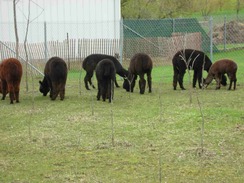
Does this help?
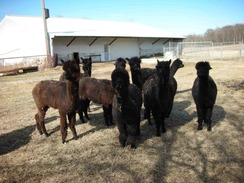
Which one is Peruvian, Chilean, or Bolivian?
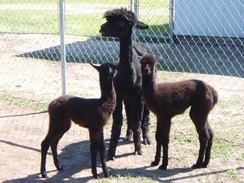
What country?
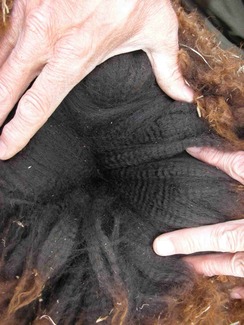
Could this be Peruvian?
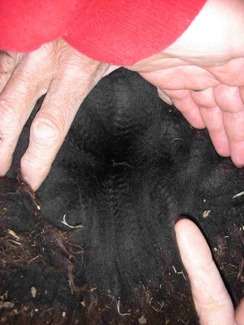
Could this be Bolivian?
Peruvian, Chilean, and Bolivian is touted as a difference in quality and I find this hard to believe and offer my reasons why.
Peruvian, Chilean, and Bolivian refer to Port of Export. Port of Export is the exit point of an alpaca from South America. This does not even designate Country of Origin. On point, a story related to export was related to me by the exporter. He originally had exit visas for his alpacas from Peru when that exit visa was cancelled just prior to shipment. He therefore drove the alpacas to Chile and exported them from Chile. He asked, “Does this make them Chilean or Peruvian?”
Take under consideration that many alpacas for years roam the altiplano, are exchanged between farms, and that the altiplano is a shared area by Peru, Chile, and Bolivia and this further distorts the use of Port of Export or Country of Origin as a designation of higher quality alpacas.
To profess qualities to specific alpacas as a result of specific Export or Country of Origin as Steve Hull recently stated, “Many phenotypic Chilian animals (longer nose, barer legs, color) when bred to a distinct Peruvian line that had a tremendous cria that was clearly better than either parent.” just boggles my mind having observed alpacas touted from any one of the three countries expressing these same traits with enough frequency from each to disenfranchise this statement.
Early on, a few exporters got together and were discussing methods to market their alpacas. The concept of how do we make our alpacas more desirable, more valuable, and higher quality than the next guy arose and the idea was struck that if we state Peruvian are better than from other countries we can therefore market them as higher quality. This has gone so far that when talking with an original exporter I was told, “South Americans bred quality alpacas in Peru and ate those from Chile and Bolivia.”
I would bring to light an example that what South Americans have done is breed in response to the market producing the alpaca desired most by commercial fiber markets. To that point, the commercial fiber market recognized a shortage in quality colored alpacas and pointed this out to the breeders in South America. Within three years the breeders had developed quality colored alpacas that met the market demand. This brings us to the point; it is careful breeding selection that defines quality, not point of origin.
Now let’s get to what I believe the truth of the matter might be. There were some individuals and estancias in South America that were practicing Controlled and Selective Breeding. The quality on these estancias was and is superior to the individual who selected whatever male might be present. Eric Hoffman incorporates this latter thought in his presentation. “I thought I would learn about the centuries of experience the South American Indian employees in selective breeding decisions having watched three Indians cull an alpaca for food. When I went up and asked what traits made this culling selection, was it fleece, conformation, or what, I was told, “we were hungry and this was the closest one.”
Some estancias, (Peru) Accoyo. Alianza, Macusani, Pinaya, Sollocota, (Bolivia) Acero Marka, (Chile) Patagonia to name a few developed specific lines of alpacas that had superior characteristics to most alpacas in South America. If they happened to be from Peru then alpacas arising from those estancias became Peruvian. One doubled up on both attributes as designation of quality and called them Accoyo Peruvian. This is not to say that they are not but we are dispelling the concept of Port or Country of Origin as the demarcation of quality alpacas.
My last point is twofold, first, breeding decisions in America have taken lines such as Accoyo Macasani, or Acero Marka a long way from the original line because the person that possessed the breeding knowledge who developed those lines is no longer involved in those decisions such as Don Julio Berreda with Accoyo. Once another individual became involved in breeding decisions the demarcation of that line ended. Again, this is not to say that new breeders cannot improve upon, or continue to develop exceptional alpacas, but simply, the line has evolved and become something different with perhaps an outstanding base.
My second point is simply that we have been breeding alpacas in North America now for over 20 years. Perhaps it is time that we begin to refer to our alpacas as American, a distinct, closed registry line of alpacas with unique qualities over other countries. This is not intended to be a gauntlet stating American is better just that due to a closed registry, this develops a very unique line of alpacas from any other country.
Trait quality should no longer be a designation of Port or Country of Origin, but of good quality breeding selections and decisions. I look forward to the day when we can say this alpaca is from John Doe’s Line or Mary Smiths Line of American alpacas rather than Peruvian, Chilean, or Bolivian.
|