• Home
  • Animals Farms Products
  • Pricing
  • Websites
  • List your animals
    • Sign In
    • Sign up - Get started
    • Help & Support
    • Herd Management Website Hosting About Openherd

Search Animals for Sale

  • Alpacas (8276)
  • Goats (391)
  • Swine (10)
  • Yak (77)
  • Sheep (110)
  • Dogs (32)
  • Llamas (41)
  • Chickens (24)
  • Cattle (15)
  • Miniature Cattle (2)
  • Rabbits (23)
  • Horses (32)
  • Miniature Horses (15)
  • Ducks (5)
  • Donkeys (18)
  • Birds (3)
  • Geese (2)
  • Guinea Fowl (1)
  • Quail (1)

— The Openherd Team

Browser not Supported

Please update your browser to a current version of

  • Google Chrome
  • Mozilla Firefox
  • Microsoft Edge
  • Opera
Dancing Horse Farm - Logo

Dancing Horse Farm

Our Focus is Fiber

Share
  • Email a Link
  • Share on Facebook
  • Share on X
  • Pin on Pinterest
Save
 Photos
Kim and Tim Gleason
221 Fort Dix Road
Pemberton, NJ, 08068
609-726-1227
609-605-1394
www.dancinghorsealpacas.com
Send Message
Facebook

Member of

Empire Alpaca Association
  • About
  • Animals
  • Products
  • Events
  • Blog
  • Articles
  • More
    • Educational Farm Tours!
    • DIRECTIONS TO OUR FARM
Book a farm event >
FarmArticlesDo Differences in Maternal Immunoglobulin G Influence Passive Transfer and Subsequent Cria Growth in Alpacas?
Share
  • Email a Link
  • Share on Facebook
  • Share on X
  • Pin on Pinterest
Save
Dancing Horse Farm - Logo
Alpacas42
  • Breeding Chart
  • Foundation
    • Huacaya33
  • Breeding Stock
    • Huacaya Females2
    • Huacaya Males15
  • Herdsires
    • Huacaya12
  • Jr.Herdsires
    • Huacaya3
  • For Sale
    • Huacaya Open Female6
    • Huacaya Male7
  • Lease
    • Huacaya Herdsires2
  • Sold71
Horses3
  • Lipizzan3
    • Foundation3
      • Stallion2
      • Mare1
Sheep10
  • Babydoll Southdown4
    • Foundation4
      • Ram1
      • Ewe3
  • Harlequin3
    • Foundation2
      • Ram1
      • Ewe1
    • For Sale1
      • Ewe Lamb1
    • Sold3
Products18
  • Fiber & Yarn4
    • Raw Fiber3
    • Yarn1
  • Clothing & Apparel13
    • Apparel1
      • Sweaters1
    • Accessories9
      • Scarves & Wraps8
      • Gloves & Mittens1
    • Hats2
      • Knitted Hats2
    • Footwear1
      • Socks1
  • Home & Garden1
    • Bedroom & Living1
      • Bedding1
Services2
  • Professional Services1
    • Farm Design1
  • Farm Events & Tourism1
    • Farm Tours & Field Trips1


Proud Member of

Empire Alpaca Association

Featured Items

Photo of LMNA Lunar Eclipse
LMNA Lunar Eclipse
Medium Brown
Matrix Majesty, Legacy!
$4500
Stud Fee: $800
Photo of 100% Royal Grade Alpaca Slot Scarf
100% Royal Grade Alpaca Slot Scarf
Our Signature Scarf!
$85.00
Photo of Accoyo America Zurbriggen
Accoyo America Zurbriggen
White
Top 1% EPDs!
Stud Fee: $2000
Photo of 100% Natural Alpaca Yarn Skeins
100% Natural Alpaca Yarn Skeins
From Our Herd!
$22.00

July 19, 2024

Do Differences in Maternal Immunoglobulin G Influence Passive Transfer and Subsequent Cria Growth in Alpacas?

Presented at the Theriogenology Veterinary Conference 2016

By: Kim Gleason, PhD , Lynn Edens Arturo Pena
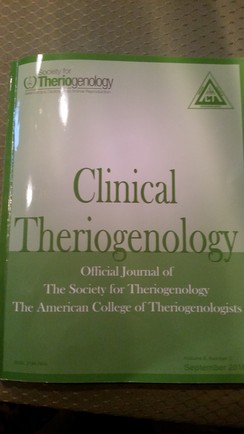
There's our Issue! Our paper is on page 300

There's our Issue! Our paper is on page 300

Conference Hotel-Ashville, NC
Conference Hotel-Ashville, NC

Checking in to the conference

Checking in to the conference

Finally on stage!

Finally on stage!

We are very proud to announce that the first part of our year-long research study has been accepted for publication in the prestigious scientific veterinary journal, Theriogenology. I was thrilled to have our work recognized by the scientific community & given the opportunity to present our findings at the Theriogenology annual meeting in July. This important study was overwhelmingly received positively by veterinarians from all over the country:


Do Differences In Maternal Immunoglobulin G Influence Passive Transfer and
Subsequent Cria Growth in Alpacas?
Kim Gleason, PhD1, Lynn Edens2, Arturo Pena2
1 Dancing Horse Farm, Pemberton, NJ 08068, 2 Little Creek Farm, North Salem, NY 10560

Undetected failure of passive transfer (FPT) of immunoglobulin is a major determinant of mortality in newborn alpaca cria, and early detection with proactive management can reduce mortality rates in cases of suspect FPT. The goal of this prospective observational study was to evaluate maternal serum IgG levels as a predictor for subsequent cria FPT (IgG <400 mg/dl) and/or poor cria early development. Prepartum blood samples were collected on dams within 60 days of anticipated birth, and on suckling cria within 36 hours after birth, and analyzed for serum IgG concentration by use of a commercial spectrophotomic assay. Any cria with a birth IgG < 400 mg/dl was offered oral maternal colostrum as routine practice. Birth weights, and weights at two weeks and two months were recorded for all cria to establish growth patterns. Dams were divided into three groups based on natural breaks in prepartum IgG levels of 1000 to 1499 mg/dl (n = 25), 1500 to 2000 mg/dl (n = 22), and >2000 mg/dl (n = 13). Analysis of variance within maternal groups revealed significant differences in cria birth IgG levels, whereby the highest levels were observed when dam IgG measured 1000-1499 mg/dl, followed by 1500-2000 mg/dl and cria had the lowest birth IgG levels from dams exhibiting IgG levels > 2000 mg/dl (640 mg/dl, 554 mg/dl and 545 mg/dl respectively). Although there were cria with birth IgG <400 mg/dl in every dam group, there were more in the latter group. Cria that were handfed maternal colostrum tended to have lower measured IgG, but this did not reach statistical significance. Despite differences in birth IgG levels, cria birth weights, weights at two weeks and weights at two months did not differ amongst maternal groups. Interestingly, the maternal group with the highest IgG and subsequent lowest cria IgG levels had more births in the spring than the other groups, raising concerns for a seasonal effect on immunoglobulin passive transfer. Results of this study suggest that maternal IgG could be an early, gestational indicator of potential FPT births in North American alpacas. Early identification of possible problems can negate the need for costly and invasive treatments such as plasma transfer, which often requires hospitalization. More research is needed to follow cria development to weaning, and to investigate possible seasonal influences on passive transfer.
© 2026 Openherd Terms Privacy
More info
List your animals

Openherd

We exist to help family farms be successful.

  • About Openherd
  • Herd Management
  • Marketplace
  • Websites
  • Terms & Conditions
  • Privacy Policy
  • Facebook page

Support

100% U.S.-based email and phone support!

  • Support & FAQ
  • Join Openherd
  • Plans & Pricing

Advertise

Advertising for farms, vendors, professionals, and corporate.

  • Advertise on Openherd
  • Advertising types, costs
  • Create an ad (account required)

How Openherd Works

Our system is easy, affordable, and effective:

  • Livestock Marketplace
  • Herd management
  • Farm website hosting
  • All managed in one place!
  • Learn more List your animals!

Website Hosting

The easiest farm website you'll ever have!

  • Websites
  • Website Designs
  • Domains, SSLs, Email
  • Ecommerce
  • Concierge Services
  • How to create your website
  • Why Openherd websites are best for farms