|
July 05, 2012
Heat Stress Management
By: David G. Pugh, DVM C. Norman Evans, DVM Jimmy Hudson, MD Art Kennel, MD
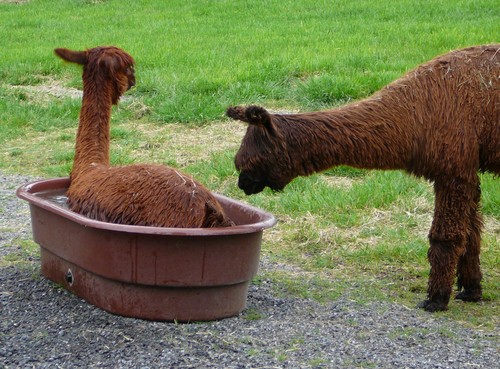
Cooling off the time tested way!
The initial signs of heat stress may be quite subtle and apparent to only the most astute observer. The most common early signs of heat stress may include:
Panting
Depression or dullness
Anorexia or off feed
Rectal temperature of >104° F
Respiratory rate >40 breaths per minute
Heart rate >90 beats per minute
More obvious signs include:
Drooping of the lower lip
Excessive salivation
Facial or partial facial paralysis
Scrotal swelling or edema in the intact male
Trembling, weakness, difficulty breathing
Abnormal behavior
Some depressed alpacas will lie near water troughs or may defecate while in the cushed position. As heat stress progresses, body systems begin to fail due to fatigue and loss of body fluids and electrolytes. The alpaca becomes very depressed and unable to stand. Occasionally, edema of the legs and chest will develop due to cardiovascular collapse and heart failure. When the rectal temperature reaches 105°-108°F or greater, the alpaca may convulse. Without intervention, severe alterations of the alpaca’s ability to maintain a safe body temperature will result in death.
It is of paramount importance that the alpaca caretaker be vigilant and know the normal behavior of an individual alpaca. Heat stress syndrome may begin with an alpaca simply not eating and depressed, and then rapidly progress to a complete collapse of all body systems with resultant death. The onset of this syndrome may be so insidious that careful observation of any alterations in the eating, drinking, and other behaviors of the alpaca is critical in the detection and early treatment of heat stress. One of the most common mistakes is to assume the depressed alpaca will be fine, and to delay close examination. Alpacas that are not acting normally (those behaving out of their normal routine) should be examined immediately. When heat stress is suspected, your veterinarian should be consulted in order to perform a complete physical examination for diagnosis of other diseases occurring along with, and possibly exacerbating, heat stress, e.g. pneumonia, parasitism, etc.
TREATMENT
The intensity of treatment should be determined by the severity of the signs the alpaca is exhibiting. The most effective treatment in the early stages is simply cooling the alpaca down. This can be accomplished by hosing the alpaca down with a water hose, placing the alpaca in the shade or pond, in front of a fan or in an air conditioned room. Expeditious shearing of the chest and blanket area in an air conditioned room, without placing undue stress on the alpaca, may also be considered. If an unshorn or ungroomed alpaca is sprayed or sprinkled with water to aid in cooling the wet fiber may form a “mat” with resultant heat retention. If the alpaca has been wet down over wool or heavy fiber, it is imperative to ensure that thorough skin contact be made with the water and care should be taken to avoid wetting only the fiber.
Alpacas that are lying down, depressed, unable to rise and in severe distress may not only require cooling (e.g. water hosing, air conditioning) but may also require more stringent measures such as alcohol rubs, ice water enemas or water immersion. If cold or ice water enemas are used for cooling, it is important to note that the rectal core temperature may be inaccurate for up to six hours. All dehydrated alpacas should be allowed free access to fresh, clean, cool water. As they cool down and rest, many will begin to drink. Those alpacas too depressed to drink or who are clinically dehydrated (<8%) should be given fluids by oro-gastric tube. Care should be taken when this is done, and if the owner-handler is not experienced in gastric intubation, it is best to enlist the aid of a practicing veterinarian before attempting to pass a stomach tube. Alpacasthatareclinicallydehydrated(>8-10%) are best rehydrated with a balanced electrolyte solution intravenously as fluid given by oro-gastric tube will be poorly absorbed from the intestine.
Ancillary treatments which may be indicated include non-steroidal anti-inflammatory drugs (i.e. Banamine) for pregnant females and/or steroids (i.e. dexamethasone) for open females and males. Injectable B vitamins, which include thiamine, may be of value not only to improve appetite but also to aid in the prevention of an anticipated complication called polioencephalomalacia. The use of probiotics or transfaunation may be of value in anorectic alpacas with depressed stomach motility. In most cases where the animal's Vitamin E or selenium status is questionable, alpacas should be given supplemental Vitamin E and selenium by injection. If the diet has been fortified or if the alpaca’s whole blood selenium concentration is normal, injectable selenium is contraindicated.
Alpacas recumbent and depressed will have a compromised immune system and broad spectrum antibiotics may be indicated to prevent pneumonia or other secondary infections. Again, a veterinarian should be consulted in all instances where invasive therapy is indicated. Above all, common sense should dictate all modes of treatment. Good quality feed should be made available free choice, but close monitoring is needed to prevent grain overload. alpacas unable to stand should be massaged, rolled, floated in tubs or ponds, placed in a sling, and/or kept in heavily bedded stalls in order to prevent damage to muscles. In cases of mild heat stress, mild treatment may be all that is required, but in severe cases, intensive medical intervention will be warranted.
To learn more about heat stress in alpacas, The Camelid Distance Education Program at Kansas State University in co-operation with the Mid-America Alpaca Foundation Camelid Education Fund have produced the following video covering Heat Stress in Camelids.
References
|