When it comes to keeping our rabbits healthy and thriving, internal parasites are one of those quiet problems that can quickly take a toll if left unchecked. Worms can cause everything from weight loss to digestive upsets, and even affect coat quality — which we certainly don’t want for our beautiful Angoras!
Note: If you have multiple rabbits, it is also important to treat ALL of them, as parasites can spread easily between animals. Treating all rabbits in your household to prevent reinfection.
Physical & Behavioral Signs
- Weight loss despite a good appetite
If your rabbit is eating normally but gradually losing weight or condition, internal parasites could be stealing nutrients.
- Dull or rough coat
A healthy rabbit’s coat should be soft, shiny, and dense. A dry, flaky, or dull coat often points to nutritional loss — sometimes caused by worms.
- Lethargy or decreased activity
Worms sap energy. A rabbit that seems “off,” less playful, or more withdrawn might not be feeling its best inside.
- Reduced appetite or picky eating
Some rabbits lose interest in food altogether when worms start causing digestive irritation.
- Soft or unformed droppings
Persistent soft stools, intermittent diarrhea, or mucus in the droppings are often red flags for intestinal parasites.
- Visible worms or eggs in droppings
It’s not common, but in heavier infestations, you may actually see thin, thread-like worms in the stool.
- Scooting or excessive grooming around the hind end
Pinworms can cause itching or irritation near the anus, leading to scooting or extra cleaning behavior.
- Poor growth in young rabbits
Young bunnies with unthrifty coats, slow growth, or bloated bellies may be battling an internal parasite burden.
When to Consider Routine Deworming
Even if your rabbits seem healthy, it’s wise to do preventive worming every 3–6 months, especially if they:
- Have outdoor access or graze on grass.
- Live in group housing or near other livestock.
- Attend shows or come into contact with new rabbits frequently.
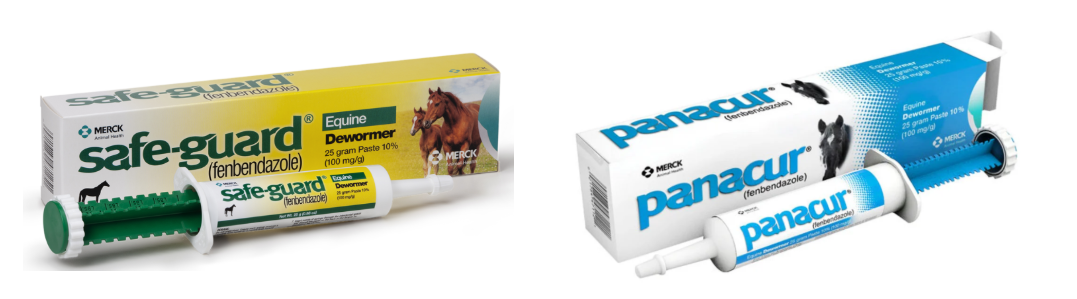
Using a gentle, broad-spectrum dewormer like Fenbendazole (Safeguard or Panacur) on a schedule can help prevent these issues before they ever start. It comes in liquid, paste, & pellet form. I would not recommend pellet form, as the bunnies tend to dig it out and you have no way to ensure they are ingesting it.
The paste or liquid dewormer can be given straight by mouth using a syringe or mixed into a bit of food, as long as you’re sure your rabbit eats it all.
One of the safest and most effective dewormers I’ve used (and trusted for years) is Fenbendazole, found in products like Safeguard and Panacur. It’s a broad-spectrum antiparasitic that targets a wide range of internal nasties — from roundworms and pinworms to protozoa such as Encephalitozoon cuniculi (E. cuniculi).
Why I Choose Fenbendazole
Note: Always check the label for “equine / horse” and for the concentration (e.g. 10%) before using it.
I like Fenbendazole because it’s gentle, even on babies as young as four weeks old, yet strong enough to clear out a range of parasites. It’s well-tolerated, easy to measure, and available in a 10% liquid form that’s simple to administer.
The downside? It’s not a one-and-done treatment. You’ll need to give it for multiple days to fully break the parasite’s life cycle. That said, the results are worth it — and resistance is far less common in rabbits than in goats or sheep.
- For light infestations: a single dose may be all that’s needed.
- For E. cuniculi treatment: plan for a 28-day course.
- For prevention: some breeders give Fenbendazole once every few months, especially in high-risk environments.
Paste in the Tube - Dosage and Administration
Understanding the Paste Strength
Most Fenbendazole paste (like Safeguard or Panacur) is formulated at 10% concentration, which means:
- 100 mg of Fenbendazole per 1 gram of paste.
- A small “pea-sized” dab is about 0.25 grams (roughly a ¼ gram).
- So: 0.25 g × 100 mg/g = 25 mg of Fenbendazole per pea-sized dose
Liquid Dosage and Administration
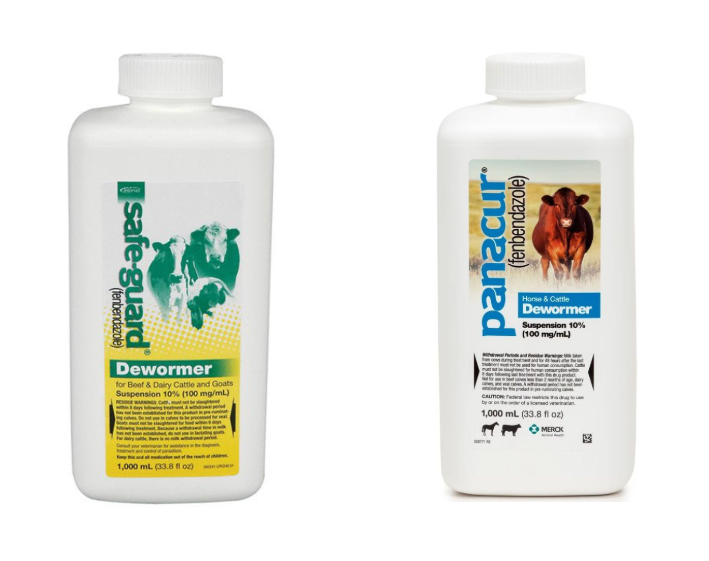
Recommended dose: The dosage of liquid dewormer for rabbits is typically based on the weight of the animal. It is generally recommended to administer 20 mg of fenbendazole per kilogram of body weight for three consecutive days. By following the dosage guidelines and completing the full course of treatment, you can effectively and safely treat internal parasite infections in your rabbit.
|
Rabbit Weight
|
Correct mg dose
|
Approximate mL
(liquid 10%)
|
Equivalent in paste
|
|
5 lb (2.27 kg)
|
~45 mg
|
0.45 mL
|
≈ 1.75 pea-sized doses
|
|
10 lb (4.54 kg)
|
~90 mg
|
0.9 mL
|
≈ 3.5 pea-sized doses
|
Monitoring and Care
During treatment, keep an eye on appetite and energy levels. It’s uncommon, but some rabbits may show mild digestive upset or act a little tired. Offer plenty of hay, fresh water, and a calm space to recover.
After treatment, thoroughly clean cages, bowls, and bedding. Parasite eggs can linger in the environment, so this is an important step to prevent reinfection.
Final Thoughts
Worming is one of those quiet maintenance tasks that pays off in big ways. A healthy gut means better absorption of nutrients, stronger immune function, and a happier bunny overall. Fenbendazole 10% remains one of the safest, most reliable tools in my rabbit-care toolbox. With careful dosing and good sanitation, you can keep those parasites from ever becoming a problem in the first place.
Stay Fluffy My Friends,
Tammy, Fuzzy Vaughn’s Farm
Life’s just better with a Giant Angora hug
P.S. Subscribe today! The Angora Newsflash - Weekly fiber-filled update with exclusive tips, rabbitry showcase, celebrating show wins, nestbox announcements, etc. Don't miss out on any Angora news.