The Alpaca
- The Alpaca belongs to the Camelid family.
- There are 2 Old World camelids - the Bactrian and the Dromedary--that live in the desert.
- There are 4 New World camelids - the Alpaca, the Llama, the Guanaco, and the Vicuna - that live in the Andes Mountains about 10,000 feet above sea level.

Alpaca Fleece ~ Why We Raise Them
- There are 2 types of Alpacas. They are almost exactly the same except for their fleece.
- The "Woolly" Huacaya (wa-kiya) has crimpy, springy fiber like a sheep, only much softer. 85% of the alpacas in the U.S. are huacayas.
- The "Silky" Suri (ser-ee) has straight, locked fiber that is smooth and lustrous like silk. Only 15% of the suris in the U.S. are suris.
- Both fleece types are luxuriously soft, warm, light, and durable - the perfect natural fiber!
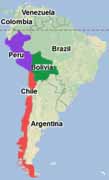
The alpaca was prized by the Andean cultures of Peru, Bolivia and Chile for its spectacular fiber and gentle nature. Domesticated more than 5000 years ago for its luxurious wool-like fiber, the alpaca is cousin to three other South American camelids: the llama, the guanaco and the vicuna. Smaller than the llama, the adult alpaca weighs 100-175 pounds, and stands approximately 36 inches at the shoulder. They have an average lifespan of 20 years, and are easily trained and handled. Gestation for a female alpaca is about 11 months, usually resulting in a single live birth. Twins are quite rare and often don't live. The baby alpaca is known as a cria, with an average birth weight of 15 pounds. These adorable deer-like babies are born with a butter-soft fleece and an endearing disposition.
Alpacas are the ideal family livestock for small or large farms. Timid and gentle by nature, they respond well to training, and are loved by both adults and children. Their feet have pads with two toenails rather than hooves, making them easy on the landscape. They have a row of teeth on the bottom jaw that closes against a soft pallet on top. Alpacas can thrive on pasture, hay, and grain, with some basic supplements. Alpacas are ruminents, and can be found sitting for hours in companionable groups chewing their cud. Alpacas easily adapt to a wide range of environments as long as they have access to sufficient food, water and shelter.
There are two kinds of alpacas: the Huacaya and the Suri. They are generally the same size and have similar temperaments. The main difference is in fiber and appearance. The cute and fuzzy Huacaya has fiber that closely resembles sheep's wool. However, alpaca fiber does not contain lanolin, has almost no scratchy guard hairs, and is much, much softer. The more stately and elegant Suri has fiber more in keeping with silk or angora, yet retains the wonderful softness that alpacas are known for. An easy way to remember the two fleece types is to think of "Woolly Huacaya" and "Silky Suri".
Alpacas have several natural sounds, but the most common is their distinctive "hum". It is common in the pasture to hear dams and crias peacefully humming to one another as they graze. The alpaca herd "bands" together, often moving in concert from one end of the pasture to the other, either in play or in alarm. Being animals of flight, they have a loud and effective alarm call when they perceive a threat. The alarm call has the effect of startling predators, sending the herd into flight for safety, and calling a livestock guardian dog if one is present. Walking through the herd, you might also hear a variety of gurgles, grunts, and clucks. The breeding male makes a unique sound known as orgling.
Herd care and management is simple and enjoyable. Alpacas require simple shelters and fencing in most weather conditions. They seem to prefer to be in pasture with access to shelter from sun, rain, and wind rather than living in a closed barn during most seasons of the year. Toenail trimming, teeth shaping, supplements and vitamins are all part of the regularly-scheduled maintainence. Shearing is done once a year. In very hot weather some alpacas even enjoy the opportunity to have their legs and belly cooled off with water from a hose or sprinklers. One of the more amusing sights is to see several alpacas vying for position in front of the spray from a hose.
Fabulous Alpaca Fiber
When all is said and done, it is the alpaca's fiber that makes this animal such a popular and sound investment. Softer, lighter, warmer and more resilient than sheep's wool, this luxurious fiber is highly sought-after around the world for fine knitted and woven clothing and blankets. Baby blankets made from alpaca often become family heirlooms, passed on from one generation to the next. The low micron count of each fiber ranges from 17 to 36. Combined with the low number of scratchy guard hairs, the fineness of the fiber creates finished products that can easily be worn next to the skin by most people without the itchy feeling of wool.
The average adult alpaca produces 5-10 pounds of fiber with each shearing. It comes in 22 natural colors, ranging from white to black, with every imaginable rich shade of brown and silver in between. The lustrous texture of alpaca fiber makes it popular with hand spinners, knitters and weavers. The commercial industry is expanding every year as the American alpaca population grows. Soon there will be enough fiber produced in the United States to support larger commercial mills, and the alpaca fiber industry will begin to soar.